The Role of Dopamine in Impulse Buying and Its Impact on Market Demand
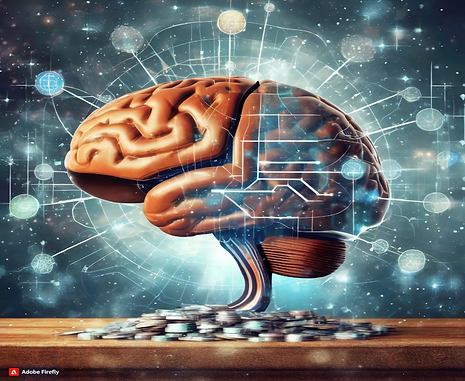
Stocksphi. (2023, October 29). Neuroeconomics: How your brain affects your financial choices. Medium.https://medium.com/@stocksphi369/neuroeconomics-how-your-brain-affects-your-financial-choices-5ccaf7a3e4b3
In a world where every retail store offers online shopping and flash sales, quick and unplanned decisions are encouraged. As a result, impulse buying has become very common. Impulse buying is the spontaneous or emotional decision to purchase a product. Studies have concluded that impulse buying is driven by instant satisfaction, regardless of necessity (SoFi, 2025). Increased impulse buying can have a huge impact on market demand because it boosts overall sales for firms (Invesp, 2025). But why do people make these decisions? About 68% of impulsive purchases are linked to dopamine, a neurotransmitter involved in reward and motivation (Numerica Credit Union, n.d.).
The role of dopamine
Dopamine not only plays a crucial role in reward and motivation but also in decision-making. Studies have concluded that it's not only released when a reward is acquired but primarily when it is anticipated (Schultz, 1998). Anticipation gives a consumer a feeling of excitement and urgency, thus motivating customers to get the product as fast as possible. Bringing things into the frame of impulsive buying, this concept gives the idea that consumers are driven by the feeling of possible future enjoyment rather than the necessity of the product. Furthermore, a rise in dopamine levels has been seen to cause a fall in rational thinking, further resulting in emotionally driven decisions (Frontiers in Psychology, 2018). This is how businesses take advantage of customers by using marketing strategies such as limited-time offers and discounts, as it creates scarcity, spiking dopamine release, and increases the probability of impulse buying (Invesp, 2025).
The impact on market demand
Impulse buying has a huge impact on market demand as behaviour encouraged by dopamine has been seen to encourage impulsive purchases, as consumers tend to buy more of the product than they had initially wanted, thus increasing the market demand in an economy, resulting in a rightward shift in market demand (Study.com, n.d.). This concept goes against the assumption that consumers are fully rational when wanting to buy a good or service, as there are many cognitive factors to consider (Stocksphi, 2023). This is why businesses that can successfully influence customers to engage in impulsive buying see a rise in sales revenue (Invesp, 2025).
Visual Diagram For Representation

Study.com. (n.d.). A rightward shift of a demand curve is called an increase in demand.
Since impulse buying results in a rise in market demand, it would be illustrated on a supply-demand diagram as a rightward shift in the demand curve, causing price to rise from P1 to P2 and quantity to rise from Q1 to Q2 (Study.com, n.d.).
Other Factors
While dopamine is a big factor in spontaneous purchases, it is not the only one. Economic factors like financial status and product prices are also crucial. Most customers are conscious of their budgets (SoFi, 2025). Some consumers also have strong self-control and make rational choices (Numerica Credit Union, n.d.). Finally, consumer preferences matter. Customers will not buy a product if it does not match their interests or desires (Invesp, 2025).
In short, dopamine has an important role in driving spontaneous purchases. This is because it encourages emotional decision-making, which greatly increases consumer spending. This will then result in a higher market demand. However, it's also important to understand that this is not the only important factor. Overall, impulse buying is a combination of cognitive and economic factors.
References
SoFiSoFi. (2025). Impulse buying: Definition, examples, and ways to stop it.https://www.sofi.com/learn/content/impulse-buying/
Numerica Credit UnionNumerica Credit Union. (n.d.). Impulse spending and dopamine.https://www.numericacu.com/articles/impulse-spending
InvespInvesp. (2025). The state of impulse buying: Statistics & trends.https://www.invespcro.com/blog/impulse-buying/
PubMedSchultz, W. (1998). Predictive reward signal of dopamine neurons.https://pubmed.ncbi.nlm.nih.gov/9658025/
PubMed CentralFrontiers in Psychology. (2018). Dopamine and reward processing.https://pmc.ncbi.nlm.nih.gov/articles/PMC6030901/
Comments